NEW: The 2026 Cargo Theft Prevention Playbook

NEW: The 2026 Cargo Theft Prevention Playbook

The 2026 Cargo Theft Playbook

Download

Download

Comparison

Opendock counts locations. Conduit runs operations.

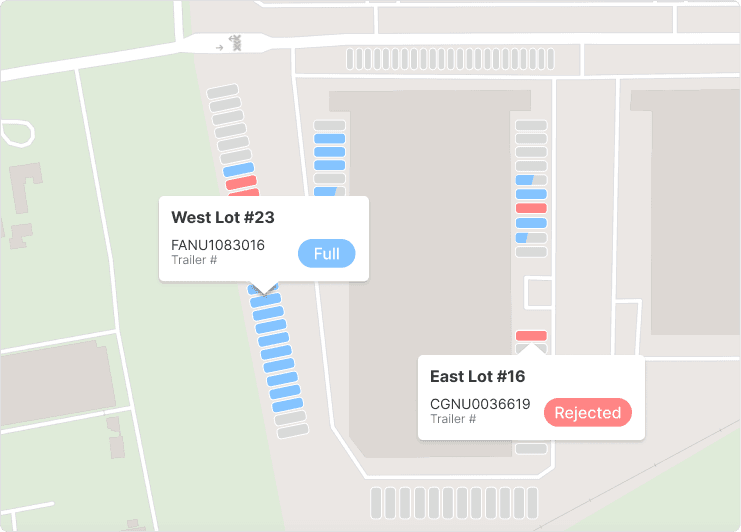
Opendock will tell you they’re at more sites. They are. What they won’t tell you is what happens at those sites after the appointment is booked — because Opendock stops there. Conduit runs the whole shipping and receiving operation: scheduling, check-in, the yard, and the documentation that proves it happened.
Trailer ABC12345 Ready for Pickup

John's Trucks has been notified.

Trailer ABC12345 Ready for Pickup

John's Trucks has been notified.

Trailer ABC12345 Ready for Pickup

John's Trucks has been notified.

Trailer ABC12345 Ready for Pickup

John's Trucks has been notified.

One platform, built as one platform.

Opendock is an acquired scheduling tool with other acquisitions bolted onto it. Conduit was built from the ground up as a single system.

An engineer on your integration, not a ticket.

We forward-deploy engineers to build your WMS/TMS/ERP connection and configure your edge cases. Ask Opendock who builds yours.

Answers in minutes, from people who’ve run docks.

20-minute first response. Every operator on our team came out of the industry.

Already on Opendock? Just export your active and past appointments to Conduit to pick up where you left off. → See how migration works

Let’s take their comparison page point by point.

Loadsmart publishes a page explaining why Opendock beats Conduit. We’d rather answer it than pretend it doesn’t exist. Here’s every claim they make, and our response.

Opendock’s claim

“Conduit is for smaller, less complex operations.”

The reality

Site count isn’t complexity. A 3PL running twelve warehouses with forty customers under those roofs — each with its own appointment rules, SLAs, and chargeback terms — is more complex than a hundred single-door sites. A campus of four buildings with shuttles, CPUs, and inbound raw materials where each play a role in the labor planning equation is the type of complexity we thrive in.

Opendock’s claim

The reality

Site count isn’t complexity. A 3PL running twelve warehouses with forty customers under those roofs — each with its own appointment rules, SLAs, and chargeback terms — is more complex than a hundred single-door sites. A campus of four buildings with shuttles, CPUs, and inbound raw materials where each play a role in the labor planning equation is the type of complexity we thrive in.

Opendock’s claim

“Your carriers already know Opendock.”

The reality

Thousands of carriers and brokers use Conduit each month. Tens of thousands of drivers are quickly loaded or unloaded at sites that use Conduit. Besides, carriers don’t choose your software. You do. They book from the link you send, on a page that carries your brand, not mixed in with your competitors. Send us your appointment history and we’ll map your carriers, customers, and load types for you. Nobody re-enters anything.

Opendock’s claim

The reality

Thousands of carriers and brokers use Conduit each month. Tens of thousands of drivers are quickly loaded or unloaded at sites that use Conduit. Besides, carriers don’t choose your software. You do. They book from the link you send, on a page that carries your brand, not mixed in with your competitors. Send us your appointment history and we’ll map your carriers, customers, and load types for you. Nobody re-enters anything.

Opendock’s claim

“3,600+ warehouse locations.”

The reality

Coverage isn’t depth. A location where a carrier can book an appointment is not an operation running on the system. Ask both vendors the same three questions: what share of your sites have driver check-in live, and how effective is it? Yard management, how happy are the jockeys using the software? A working WMS integration that reads and writes milestones, documents, videos and more?

Opendock’s claim

The reality

Coverage isn’t depth. A location where a carrier can book an appointment is not an operation running on the system. Ask both vendors the same three questions: what share of your sites have driver check-in live, and how effective is it? Yard management, how happy are the jockeys using the software? A working WMS integration that reads and writes milestones, documents, videos and more?

Opendock’s claim

“Advanced analytics; Conduit exports raw data.”

The reality

Conduit ships prebuilt dashboards and carrier scorecards out of the box — and gives you your own data, in full, to push into your warehouse or BI tool. Those aren’t alternatives. Your dock data is yours. Any vendor treating export as a downgrade is telling you who they think owns it. Everything is available via API, too.

Opendock’s claim

The reality

Conduit ships prebuilt dashboards and carrier scorecards out of the box — and gives you your own data, in full, to push into your warehouse or BI tool. Those aren’t alternatives. Your dock data is yours. Any vendor treating export as a downgrade is telling you who they think owns it. Everything is available via API, too.

Opendock’s claim

“Open API and a full connected suite.”

The reality

Their suite is three acquisitions: Opendock (Nov 2021), Kamion (Nov 2021), NavTrac (Sept 2023). Three companies, three data models, one marketing page. Conduit’s modules were built as one system, so the appointment is a single object that check-in, yard, and documents all attach to. And when you need an integration, we assign an engineer to build it. We don't outsource it.

Opendock’s claim

The reality

Their suite is three acquisitions: Opendock (Nov 2021), Kamion (Nov 2021), NavTrac (Sept 2023). Three companies, three data models, one marketing page. Conduit’s modules were built as one system, so the appointment is a single object that check-in, yard, and documents all attach to. And when you need an integration, we assign an engineer to build it. We don't outsource it.

Opendock’s claim

“Fully built-out support team.”

The reality

Their page lists “customers partner directly with company leadership” as a disadvantage of choosing Conduit. We’ll let that stand on its own. Our number: 20-minute average first response, from operators who came out of warehouse and freight operations, not a tier-1 queue.

Opendock’s claim

The reality

Their page lists “customers partner directly with company leadership” as a disadvantage of choosing Conduit. We’ll let that stand on its own. Our number: 20-minute average first response, from operators who came out of warehouse and freight operations, not a tier-1 queue.

Opendock’s claim

“Frequent updates hurt the user experience.”

The reality

They’re describing shipping speed as a defect. We ship continuously because the operators using Conduit ask for things and we build them — often the same week. Also, real customer reviews on G2 and Capterra highlight this as our strength.

Opendock’s claim

The reality

They’re describing shipping speed as a defect. We ship continuously because the operators using Conduit ask for things and we build them — often the same week. Also, real customer reviews on G2 and Capterra highlight this as our strength.

Opendock’s claim

“Established. Enterprise-grade. Trusted by thousands of warehouses.”

The reality

Fortune 50 companies switched to Conduit from the Other Guys. A few reasons why: We are SOC2 TypeI II compliant, conduct regular penetration tests, manage enterprise-grade integrations with Oracle, Manhattan, and the other big systems in house. We also obsess over our customer satisfaction. If something isn't right, we fix it as soon as we can.

Opendock’s claim

The reality

Fortune 50 companies switched to Conduit from the Other Guys. A few reasons why: We are SOC2 TypeI II compliant, conduct regular penetration tests, manage enterprise-grade integrations with Oracle, Manhattan, and the other big systems in house. We also obsess over our customer satisfaction. If something isn't right, we fix it as soon as we can.

Opendock’s claim

“Opendock covers Europe and Oceania. Conduit is USA only.”

Agreed

The reality

They’re right. If you operate warehouses outside North America, Opendock has coverage today that we don’t. We’re focused on North American and we’d rather be the best system in that market than an average one everywhere.

A dock management system isn't a basic booking page any more.

Customer-level rules, one system

Different appointment requirements, dock restrictions, lead times, and load types per customer, running side by side at the same site.

Reporting your customers can actually see

Per-customer scorecards, SLA performance, and dwell data you can hand to the account instead of rebuilding in Excel.

Capture the accessorial work

Detention, lumper, and value-added work happening at the dock gets recorded when it happens, so it makes it onto the invoice.

Consistency without uniformity

Standardize the workflow across the network while letting each site keep the constraints that are actually real.

Onboard a new customer in days

New account, new rules, new booking page. Not a re-implementation.

Defensible detention disputes

Time-stamped arrival, check-in, dock, and departure records, with photo and document proof attached to the load.

The difference between a vendor and a partner.

Conduit

Opendock

Integrations

Forward-deployed engineer builds your WMS/TMS/ERP connection, or self-service

Outsourced or self-service

Integrations

Conduit

Forward-deployed engineer builds your WMS/TMS/ERP connection, or self-service

Opendock

Outsourced or self-service

Configuration

We configure your edge cases with you

Limited configuration

Configuration

Conduit

We configure your edge cases with you

Opendock

Limited configuration

Avg. first response (tier 1)

20 minutes

Not published

Avg. first response (tier 1)

Conduit

20 minutes

Opendock

Not published

Who you talk to

Operators from warehouse and freight backgrounds

Tier-1 support queue

Who you talk to

Conduit

Operators from warehouse and freight backgrounds

Opendock

Tier-1 support queue

Product requests

Roadmap input; things get built

Little change between renewals

Product requests

Conduit

Roadmap input; things get built

Opendock

Little change between renewals

Leadership access

Direct, by design

Described on their own page as a drawback of Conduit

Leadership access

Conduit

Direct, by design

Opendock

Described on their own page as a drawback of Conduit

Your first 30 days

1

Kickoff with an expert

2

Configuration and integration build

3

Site-by-site rollout with training

4

Live, with adoption reporting

Live in days, not weeks

Bring your history with you.

Switching from scheduling systems has a reputation it doesn’t deserve. You’re not starting from a blank calendar, and you’re not re-entering three years of carrier and customer setup by hand.

1

Send us your appointment history.

Whatever you can get out of your current system. An export is enough.

2

We map it.

Our team maps your carriers, customers, load types, dock and door configuration, and scheduling rules into Conduit.

3

Go live with your data already in place.

Your operation starts on Conduit with its history intact, not as a fresh install.

Your dashboards work on day one.

Most systems need a quarter of data logged before performance reporting means anything. Import your history and you skip that entirely — you go live with better compliance data than you had on the system you left, because Conduit measures things it didn’t.

Send us an export and we’ll build your scorecards before you commit.

See your own carrier performance in Conduit, using your own appointment history, with nothing signed.

See it against your own operation.

Bring us your hardest site and we’ll show you how it runs.

Get a Demo

Bring your data and your edge cases.

Copyright © 2026. All Rights Reserved

Copyright © 2026. All Rights Reserved

🇺🇸 Based in the USA

🇺🇸 Based in the USA